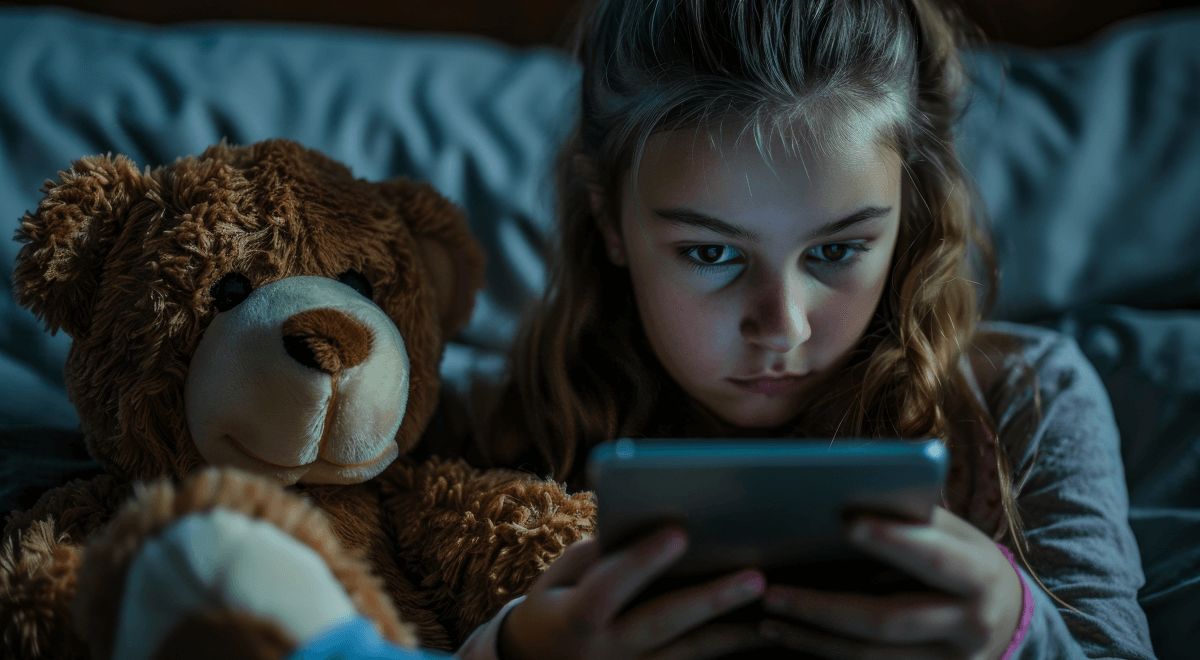
The internet is part of everyday life for children and teens. From online classes and gaming to social media and video streaming, digital access is unavoidable. But while the internet offers educational benefits, it also exposes children to serious risks. According to the American Academy of Pediatrics, excessive and unmonitored screen use can negatively affect children's sleep, mental health, and development. Here are six major reasons why the internet is not completely safe for kids — backed by real research and data.
Sleep & Mental Health Problems
Sleep deprivation among teens has reached alarming levels. The Centers for Disease Control and Prevention (CDC) reports that around 73% of high school students do not get enough sleep on school nights.
In addition:
- About 1 in 3 college students experience depression, according to the American College Health Association.
Studies published by the National Institutes of Health link excessive screen time with increased anxiety and depressive symptoms.
Late-night scrolling, gaming, and social media disrupt melatonin production, delay sleep cycles, and increase stress levels. Over time, this affects academic performance, mood stability, and overall mental health.
Online Predators and Unwanted Sexual Messages
One of the most serious dangers children face online is grooming and exploitation.
The National Center for Missing & Exploited Children (NCMEC) reports millions of online exploitation reports each year. Research shows that approximately 1 in 5 children receive unwanted sexual solicitations online.
Predators often target children through:
- Social media platforms
- Gaming chat rooms
- Messaging apps
They build trust before manipulating or coercing minors into sharing private information or explicit images.
Cyberbullying and Emotional Trauma
Cyberbullying has become one of the most common online dangers for teens.
Data from the Cyberbullying Research Center indicates that about 37% of youth aged 12–17 have experienced cyberbullying at some point.
Victims often suffer:
- Anxiety and depression
- Low self-esteem
- Social withdrawal
- Increased risk of self-harm
Unlike traditional bullying, online harassment can follow children home and happen 24/7, amplifying psychological harm.
Screen & Online Addiction
Teens now spend an average of 7+ hours per day on screens outside of schoolwork, according to the Common Sense Media.
Excessive screen time can lead to:
- Reduced physical activity
- Attention problems
- Dopamine-driven addictive behaviors
- Poor real-world social skills
The World Health Organization has officially recognized gaming disorder as a mental health condition, highlighting the seriousness of digital addiction.
Educational Problems and Academic Decline
While the internet can support learning, uncontrolled use often harms academic performance.
Research from the Organisation for Economic Co-operation and Development (OECD) shows that students who spend excessive time online for non-academic purposes often perform worse academically.
Constant notifications, multitasking, and social media distractions reduce:
- Focus and attention span
- Memory retention
- Homework quality
Children who frequently switch between apps struggle to maintain deep concentration — a skill critical for academic success.
Exposure to Inappropriate Content
Children can encounter explicit or violent material online surprisingly quickly.
Studies cited by the American Psychological Association indicate that early exposure to sexual or violent content can shape attitudes and behaviors in harmful ways.
Even with “safe search” enabled, children may encounter:
- Pornographic material
- Graphic violence
- Drug and alcohol content
- Hate speech
Without parental controls or monitoring, exposure can happen unintentionally within minutes of browsing.
Why Parents Must Take Action
The internet itself is not evil — but unrestricted and unsupervised internet access can be dangerous for children.
Experts recommend:
- Setting ascreen time limits
- Using parental control tools
- Monitoring online interactions
- Teaching digital literacy
- Keeping open communication about online experiences
According to the Federal Bureau of Investigation (FBI), proactive parental involvement is one of the strongest protections against online exploitation.
Final Thoughts: Is the Internet Safe for Kids?
The short answer: Not without guidance and protection.
From sleep disruption and depression to cyberbullying, grooming and sextortion, predators, addiction, academic decline, and exposure to harmful content — the risks are real and supported by credible research.
Parents who stay informed and actively involved dramatically reduce these dangers.
The goal is not to eliminate internet access — but to create a safer digital environment where children can learn and grow without unnecessary risk.
Protect Your Child Online with KidsNanny
Real-time AI screen scanning, WhatsApp protection, app blocking, and location tracking for Android & iOS.
Try KidsNanny Free for 7 Days