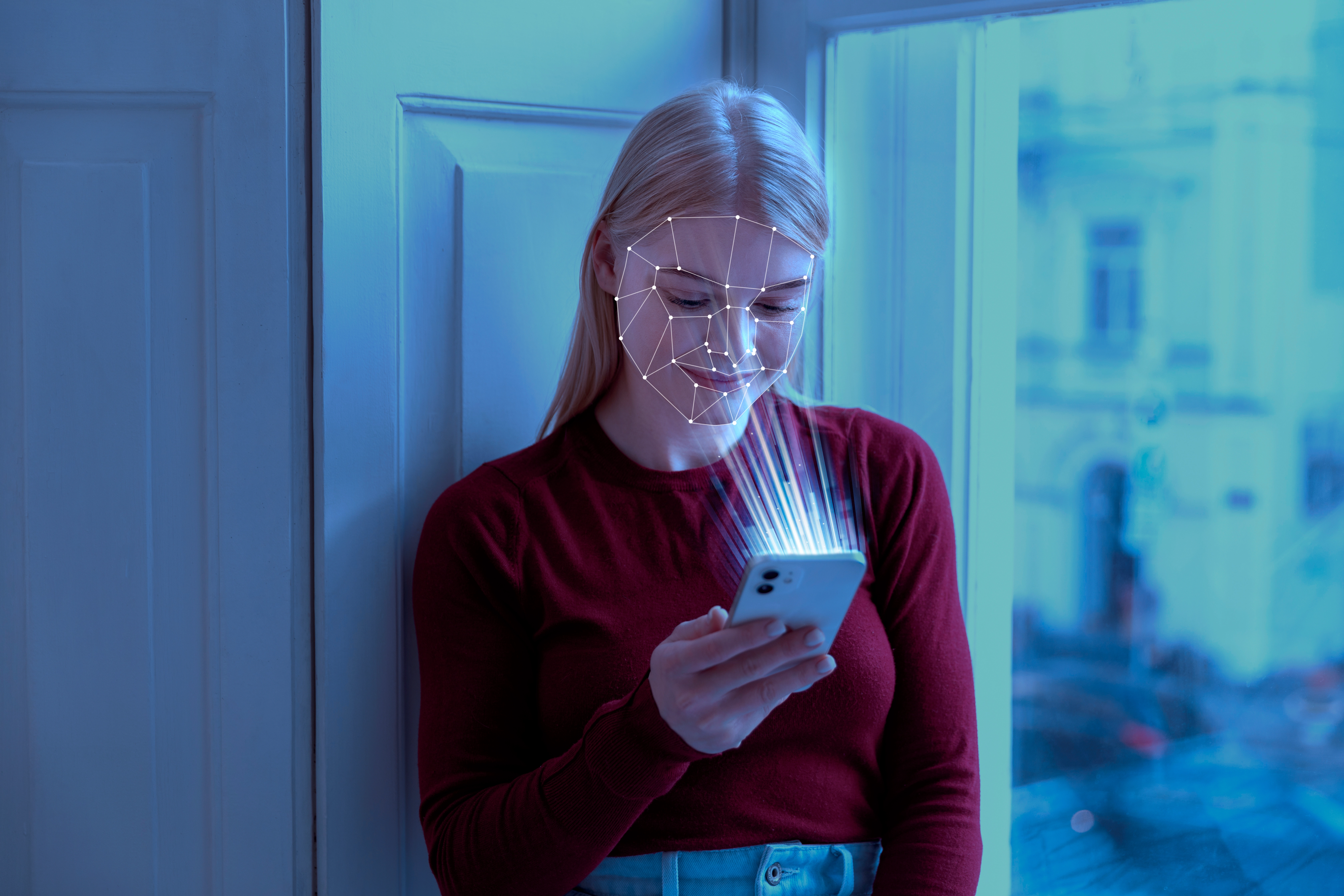
A 14-year-old girl logs into Snapchat on Monday morning and sees a message from a number she does not recognize. Attached is a naked photo. It is her face — but not her body. A classmate fed her Instagram selfie into a free AI "nudify" app during second period, and within an hour, the fake image was circulating on a group chat with 40 students. By lunch, she is hiding in the school bathroom. By dinner, her parents still do not know. This is not a worst-case scenario — it mirrors real, documented incidents reported at schools in Westfield (NJ), Beverly Hills (CA), Issaquah (WA), and Almendralejo (Spain), and according to 2025 Internet Matters research, roughly 1 in 8 children have already personally encountered a deepfake nude.
AI deepfake nudes have become the fastest-growing form of peer-to-peer abuse in schools across the United States, United Kingdom, Spain, Australia, and Canada. In the last 18 months, hundreds of documented incidents have hit middle and high schools — and experts agree the real number is multiples higher because most victims are too ashamed to report it.
If you are a parent of a child with a smartphone, this guide will tell you exactly what is happening, how the apps work, what the law says in 2026, and the concrete steps you can take tonight — starting with the tools inside KidsNanny AI parental control app, the parental control app built for exactly this new category of AI-driven threat.
What Are AI Deepfake Nudes?
An AI deepfake nude is a synthetic image created by generative AI that takes a clothed, fully innocent photograph — a yearbook picture, a beach selfie, a sports team photo — and fabricates a nude version of that person. The face stays recognizable. The body is entirely invented by the AI.
The software behind this is commonly called a nudify app or undress AI. It uses diffusion models (the same underlying technology as Midjourney and Stable Diffusion) fine-tuned on explicit imagery. You upload one photo. You wait 20 to 60 seconds. You receive a fake nude.
What makes 2026 different from previous image-abuse eras:
- Free access. Dozens of nudify apps offer 1–5 free generations per day. No credit card. No ID verification.
- Mobile first. Many of these tools live inside Telegram bots, Discord servers, and even ads served through TikTok and Instagram.
- Photorealistic output. The quality has crossed the uncanny valley. Classmates cannot tell a fake from a real nude at a glance.
- One photo is enough. Any clear face photo posted publicly on Instagram, TikTok, or a school sports page is raw material.
The Scale of the Crisis in Schools
According to 2025 Internet Matters research, 13% of children have personally encountered a nude deepfake — roughly one in eight. The same study found 38% of teenage girls (and 27% of teenage boys) believe having a deepfake nude shared would feel worse than a real nude leak, because of the helpless, mass-producible nature of the abuse.
The US Department of Education's Office for Civil Rights received a record number of Title IX complaints involving AI-generated sexual imagery in the 2024–2025 school year. Cases have been reported in Beverly Hills, New Jersey, Washington, Seattle, and Pittsburgh — and that is just the incidents that made the news.
In Almendralejo, Spain, more than 20 girls aged 13 to 15 were victimized when classmates used a nudify app to create and circulate fake nudes. In Lancaster County, Pennsylvania, students at a private school were charged after creating deepfake nudes of dozens of female classmates. Similar cases have surfaced in Beverly Hills, New Jersey, Washington State, and across Europe.
The pattern is brutally consistent:
- The perpetrator is usually a male classmate, often a friend or acquaintance.
- The vast majority of reported victims are female, though boys have been targeted too.
- The images are shared on Snapchat, Telegram, Discord, and iMessage group chats.
- Schools almost never detect it first — a student tells a parent, or the image reaches a teacher by accident.
Why Deepfake Abuse Destroys Kids Differently
Parents who did not grow up online sometimes ask: "If the photo is fake, why is the harm real?" The psychological research is clear. To the victim, their brain, and their social world, the harm is indistinguishable from a real leaked nude.
The shame response is identical
Victims describe feeling violated, exposed, and stripped of bodily autonomy. Clinicians treating deepfake victims report the same PTSD-like symptoms seen in revenge porn survivors: intrusive thoughts, hypervigilance, social withdrawal, and in severe cases, self-harm.
The image never really dies
Once a deepfake hits a group chat, it can be screenshot, re-shared, and re-uploaded for years. Victims describe a lifetime dread of the image resurfacing during college applications, job interviews, or future relationships.
The perpetrators often minimize it
Because "no real nude exists," offenders and sometimes even school administrators dismiss incidents as "pranks" or "boys being boys." This response retraumatizes victims and signals that their pain is not legitimate. It is.
What the Law Says in 2026
The legal ground has shifted dramatically. As of 2026, parents finally have real tools:
- The Take It Down Act (2025) — A US federal law that criminalizes non-consensual intimate imagery, including AI-generated deepfakes, and requires platforms to remove reported content within 48 hours.
- State CSAM laws — A growing number of US states now explicitly classify AI-generated nude images of minors as child sexual abuse material (CSAM), regardless of whether a real nude ever existed.
- UK deepfake law — Under UK legislation introduced in 2024–2025, creating or sharing a sexually explicit deepfake of any person without their consent is a criminal offense carrying jail time.
- EU AI Act transparency rules — Require AI-generated content to be labeled and give victims streamlined takedown rights.
The takeaway: if your child is victimized, you are not filing a "civil complaint about a picture." You are reporting a federal crime. Treat it that way.
7 Warning Signs Your Child May Be a Victim (or Creator)
Most kids will not tell you. Watch for the behavior:
- Sudden school refusal. A child who loved school now claims headaches, stomach aches, or anxiety every morning.
- Panic around phone notifications. They flinch, hide the screen, or leave the room when their phone buzzes.
- Deleting social media accounts overnight. Especially Instagram, TikTok, and Snapchat where their photos lived.
- Withdrawal from a specific friend group. Victims often lose entire social circles when a deepfake spreads.
- Extreme secrecy about one classmate or group chat. On the perpetrator side, kids suddenly become protective of a Discord server or Telegram group.
- New apps you do not recognize. Nudify tools often disguise themselves as "photo editors," "art generators," or "anime avatar" apps.
- Unexplained crying, anger, or self-harm. Any sudden drop in a child's mental health after a normal week at school deserves a gentle, private conversation.
How KidsNanny Protects Your Child From AI Deepfake Abuse
KidsNanny is one of the few parental control apps purpose-built for the AI-era threats this guide describes. Traditional parental controls block porn websites. That is not enough anymore, because the threat is now a free mobile app your child can install in 30 seconds.
Here is exactly how KidsNanny addresses the deepfake problem:
- Nudify app blocking. KidsNanny maintains a continuously updated blocklist of known nudify, undress AI, and deepfake generator apps, preventing installation on your child's device at the OS level.
- Instant app install alerts. The moment any new app is downloaded — including those disguised as "photo editors" — you get a notification, so you can review it before harm is done.
- AI website filtering. Known deepfake generator websites, Telegram bots, and underground image-generation forums are blocked at the browser and DNS level.
- Social media & messaging monitoring. KidsNanny's WhatsApp tracker, Snapchat alerts, and Telegram monitoring flag suspicious image-sharing patterns and group chat behavior.
- Screen time and app usage reports. See exactly which apps your child opens, how long they use them, and when — so behavior shifts don't go unnoticed.
- Safe search enforcement. Forces Google, Bing, and YouTube into strict mode, closing the easiest back door into nudify app tutorials and download pages.
- Real-time location and geofencing. For the 1 in 8 kids who withdraw and skip school after victimization, KidsNanny helps parents know they are safe.
You can install a modern parental control app like KidsNanny in under 10 minutes on both iOS and Android. It runs quietly in the background, respects your child's dignity, and gives you visibility exactly where it matters most — not a keystroke logger, but an intelligent guard against the AI-driven threats schools are still not equipped to handle.
What to Do If Your Child Is Victimized — Tonight
If you are reading this because it has already happened, do these things in order. Do not freeze. Do not wait until Monday.
- Stay calm and believe your child. Your first reaction sets the tone for recovery. Say: "This is not your fault. I am on your side. We are going to fix this together."
- Preserve evidence. Screenshot the image, the URL, the usernames, the group chat, and timestamps. Do not delete anything yet.
- Report to the platform. Snapchat, Instagram, TikTok, Telegram, and Discord all now have expedited deepfake and CSAM takedown forms required under the Take It Down Act.
- File with Take It Down (NCMEC) at takeitdown.ncmec.org for minors, or StopNCII.org for 18+. Both use hash-matching to scrub images across major platforms.
- Call the police. This is a federal crime. Ask for an officer trained in digital abuse or ICAC (Internet Crimes Against Children).
- Contact the school in writing. Title IX requires schools to investigate. Put everything in email, not verbal meetings.
- Get professional support. Contact a therapist experienced with digital trauma. The Cyber Civil Rights Initiative (cybercivilrights.org) maintains a crisis helpline.
- Lock down devices and accounts. Change passwords, enable two-factor authentication, and install KidsNanny to prevent re-victimization and monitor for ongoing harassment.
How to Talk to Your Kids About Deepfakes (Before It Happens)
The single most powerful protection is a conversation. Here is a short script that works with kids 10 and up:
"There are new AI apps that can take a regular photo of anyone — even a school picture — and fake a naked version of that person. It is a federal crime, and it has been happening in schools across the country. If you ever see one of these images of anyone — a friend, a stranger, yourself — I need you to come to me. You will not be in trouble. I will not take your phone. We will handle it together. The person who made it is the one who did something wrong, not you."
Repeat the conversation every few months. Normalize it the way you normalize talking about seat belts.
The Bigger Picture: This Is the New Normal
Generative AI is not going back in the bottle. Every year, these tools become cheaper, faster, and more accessible. Schools are 5 to 10 years behind the threat curve. Law enforcement is catching up but overwhelmed. Social platforms respond, but only after harm.
That leaves one line of defense: the parent, equipped with the right tools, having the right conversation, before the app reaches the child's home screen.
You do not need to become a cybersecurity expert. You need a parental control app built for 2026, not 2016. KidsNanny is built exactly for this moment — for parents who want protection against nudify apps, AI chatbots, hidden vault apps, cyberbullying, and every other threat schools are still learning to name.
Shield Your Kids From AI Deepfakes & Nudify Apps
KidsNanny detects & blocks nudify apps at install, flags explicit content on screen, and alerts parents before harm happens.
Protect Your Device with KidsNannyFinal Thoughts
A generation ago, parents worried about the wrong kid at the bus stop. Today, the threat lives inside a free app on a classmate's phone, and the weapon is your own child's smiling school photo. The good news is that awareness is the single biggest barrier to harm, and you are now ahead of 90% of parents just by reading this far.
Share this article with one other parent tonight. Install an AI parental control app on your child's device this weekend. Have the conversation this week. These three actions, together, will protect your child from an entire category of threat that most families do not yet know exists.
If this guide helped you, explore our related deep-dives on AI companion chatbots, cyberbullying action plans, and why KidsNanny is the best AI parental control app of 2026.